Why Vegan Doesn’t Always Mean Healthy: The Hidden Risks of Vegan Processed Foods
“Vegan” on the label is not a magic shield. I wish it were. If choosing the plant-based option automatically made you healthier, my work as a coach would be a lot easier and far fewer people would be stuck wondering why their cholesterol, blood sugar, cravings, and weight are moving in the wrong direction. Here’s the hard truth: you can go vegan and still eat in a way that inflames your body, spikes your glucose, disrupts your gut, and keeps you hungry. If that sounds provocative, good. It should. Because what most people meet when they first try a plant-based life isn’t a farmer’s market; it’s a wall of vegan processed foods: boxes, bars, shakes, faux meats, and dairy-free desserts, all wearing a health halo. The marketing is clever, the packaging is green, and the claims about high protein, gluten-free, and organic are soothing. But biology doesn’t read labels. It reacts to what’s inside the food, not the promise on the front of the box.
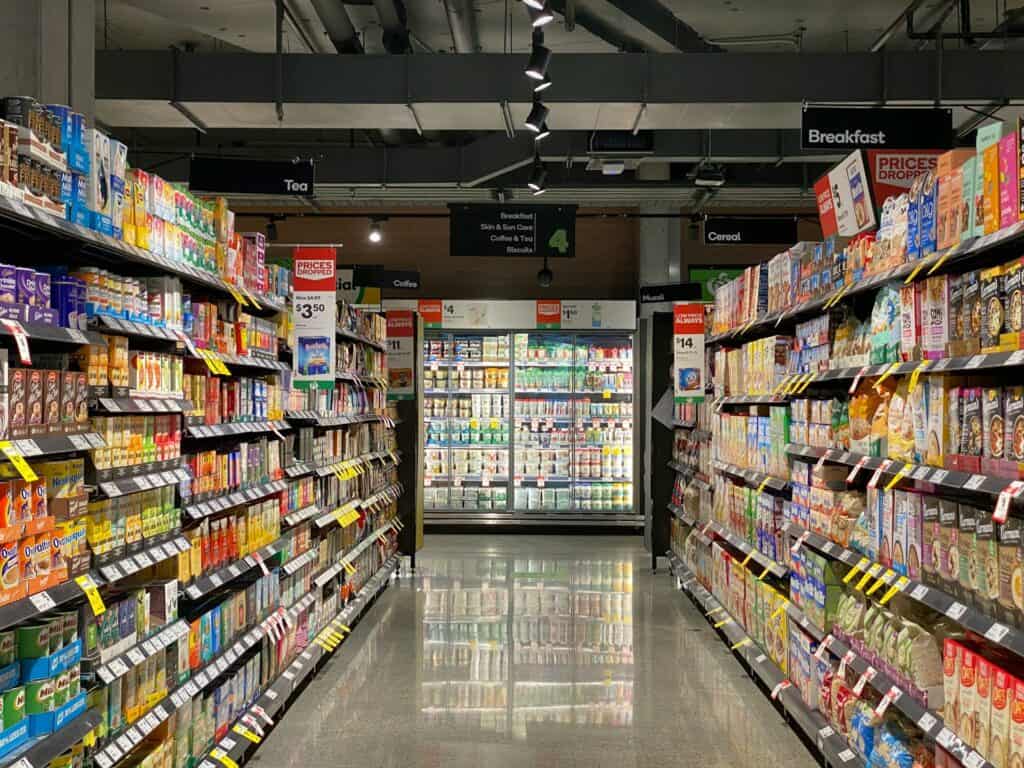
The Vegan Health Halo
Let’s get clear on terms so we can talk like adults. A whole-food, plant-based pattern is built around foods that still look like they did when they grew: vegetables, fruits, beans, lentils, whole grains, potatoes, nuts, and seeds. Some processing is fine, like frozen veggies, canned tomatoes, tofu, tempeh, plain plant milks with short ingredient lists. The trouble starts when “plant-based” becomes a costume for ultra-processed products designed to mimic what you just stopped eating. That’s the vegan cookie with three kinds of sugar, the dairy-free yogurt thickened and sweetened into a dessert, the breakfast cereal glued together with syrups and oils, the bar built from isolates and crisps instead of actual oats and nuts.

None of this is a moral issue. It’s a metabolic one. Your body doesn’t care that the sugar came from organic agave or that the oil was cold-pressed, it still has to manage the same glucose spikes, the same calorie density, and the same pro-inflammatory signals.
The health halo preys on good intentions. You want to do better for yourself, for animals, for the planet. A green leaf on the box and a “plant-powered” claim drop your guard. Flip the package over and the story often changes: long ingredient lists you don’t cook with, multiple sweeteners, refined oils, emulsifiers, and “natural flavors.” Fortification replaces nutrients stripped during processing. Stack enough choices like this and you’ve built a vegan diet that behaves like the standard packaged diet with different branding, similar biology and chemistry. If your goal is better energy, weight, and metabolic health, the ingredient pattern is what matters.
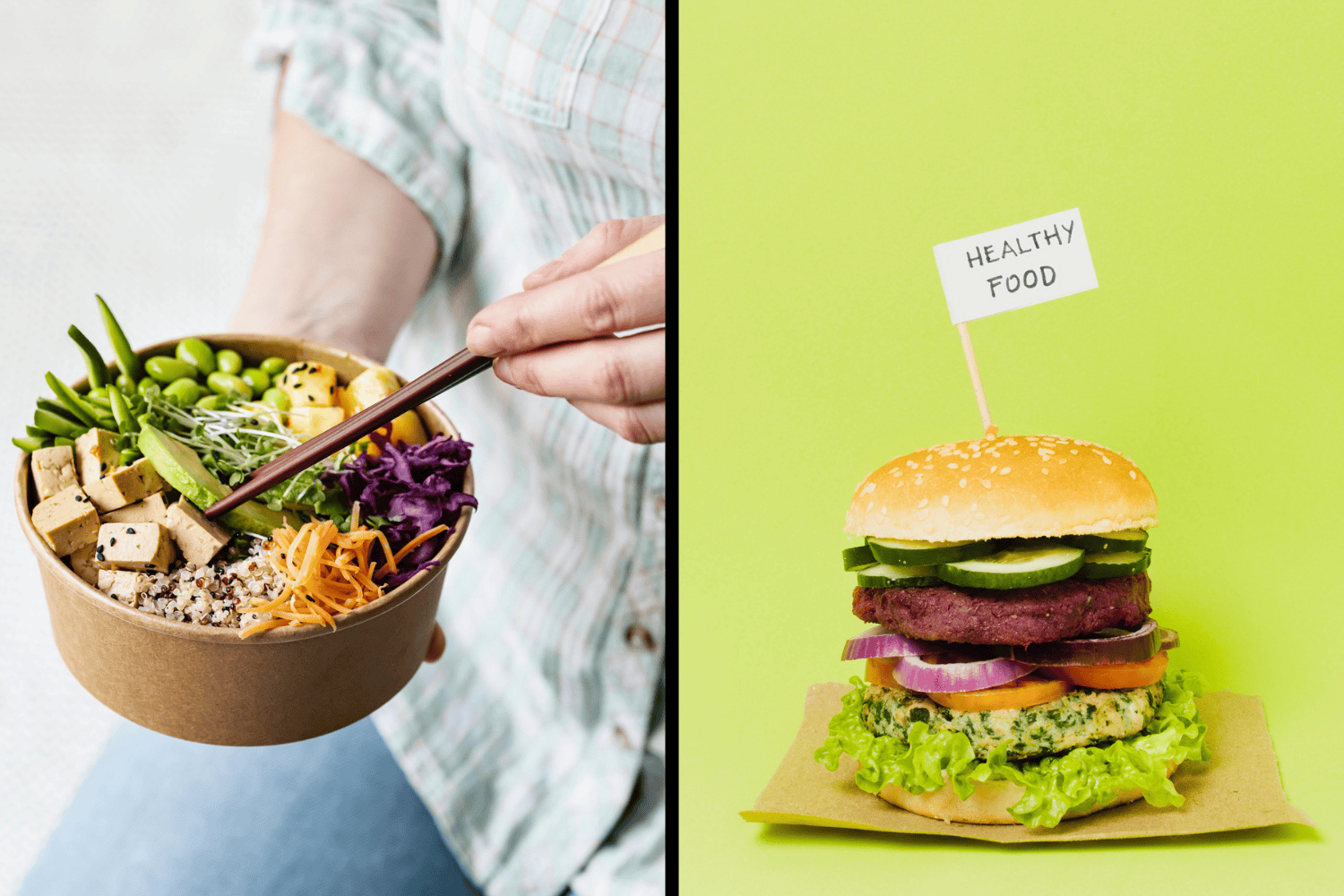
Whole Food vs. Processed Vegan Eating
Here’s what that pattern does under the hood. Fast-digesting sugars, by any of their friendly names, rush into circulation, pushing insulin up and sending you on the roller coaster: spike, crash, crave, repeat. Refined starches do a similar trick. Brown rice syrup and tapioca starch do not behave like a bowl of intact brown rice and beans; they absorb faster than your satiety signals can respond. Layer refined oils on top and you’ve created calorie density without fiber or water—an efficient way to overshoot your needs before your brain catches up. Add emulsifiers and certain additives, and you may irritate the gut lining that helps regulate appetite and inflammation. You don’t need a PhD to see this. Just pay attention to how you feel after different meals. The common pattern on a processed vegan plan is simple: more cravings, more snacking, more afternoon fog, and quietly worsening lab numbers.

Lessons from Real Life
If this sounds theoretical, let me bring it home. When I first shifted toward a vegan pattern years ago, I did what most motivated, busy people do: I swapped burgers for plant-based burgers, cheese for vegan cheese, ice cream for non-dairy ice cream, and snacks for “better-for-you” chips and bars. My intentions were solid. My outcomes were not. LDL crept up. Fasting glucose nudged into prediabetes. Joints felt older than they were. I hadn’t changed the operating system of my diet, I had only swapped the apps. The plan turned around when I did something less flashy and far more effective: I built most meals from intact plants and used the processed vegan products as occasional accessories instead of daily staples. Energy stabilized, cravings calmed, and the numbers started moving in the right direction. That’s not a miracle. It’s physiology doing its job when you give it the right inputs.
Why Processed Vegan Foods Are Hard to Resist
Why are vegan processed foods so hard to resist? Convenience is the honest answer. After a long day, a patty that sizzles, a sauce that pours, a bar you can unwrap, those feel like wins. Food engineering also pushes the pleasure buttons with precision. The sugar-salt-fat blend is tuned to the “bliss point,” and your tongue doesn’t care that the fat came from coconut instead of cream. Texture is crafted so a cracker snaps just so and a plant-based cheese stretches enough to be satisfying. Add bright packaging, health claims, and the social comfort of eating something that looks familiar, and you have a product built to be chosen. There’s no shame in finding that persuasive. But there is risk in pretending those products behave like beans, greens, grains, fruit, and potatoes once they hit your stomach.
The issue isn’t that any single bar or burger torpedoes your week. The issue is displacement. Every time you reach for a vegan processed stand-in, you push a high-fiber, high-water, nutrient-dense meal off your plate. Fiber is not a side note in a plant-based diet, it’s the operating system. It slows glucose absorption, feeds the gut microbiome, and helps satiety signals arrive on time. When you strip fiber out, or never include it, the appetite regulation that whole-food plant-based eaters rely on quietly disappears. That’s why a potato, lentil, and vegetable stew will leave you satisfied for hours while a vegan pastry and latte leave you poking around the pantry soon after. Hunger is not a character flaw. It’s biology responding to the physical structure of your food.
Spotting the Red Flags
So how do you spot the land mines quickly? Start with the ingredient list and the order of ingredients. If a product is built from syrups, refined flours, and oils before any recognizable whole food shows up, you already have your answer. If the list runs longer than your attention span and includes items you’d never keep in your own kitchen, you’ve likely drifted into ultra-processed territory. Pay attention to glow words like high-protein, keto-friendly, fortified, artisanal, because they distract from the basics and have nothing to do with whether the food will help your metabolism. When in doubt, imagine the product without its marketing. Would you still want it if it were in a plain brown wrapper? If the answer is no, your body probably won’t thank you for it.
A rule I teach busy professionals is this: choose the product with the shortest list of ingredients you could buy separately in a normal store and cook with at home. A jar of crushed tomatoes, basil, and salt beats a jar thickened with gums and sweeteners. A block of plain tofu beats a breaded, oil-soaked “cutlet.” Unsweetened plant yogurt you can top with fruit beats the dessert disguised as breakfast. If you truly need something grab-and-go, favor options built from whole components, like oats, dates, nuts, over science-fair projects that happen to be vegan. You’re not trying to win a purity contest; you’re trying to pick defaults that make it hard to overeat and easy to feel good.
Making Whole Foods the Easy Choice
Now let’s talk systems. Willpower is a terrible long-term strategy; logistics win. If your fridge holds washed greens, cooked beans, a pot of grains, cut vegetables, and a simple sauce you like, you can build dinner in minutes. If your freezer has mixed vegetables, berries, and a couple of soups you batch-cooked, “no time” stops being an excuse. Stock oats, legumes, whole-grain pasta, canned tomatoes, and spices. You don’t need to be a chef. You just need the healthy choice to be the easy one.
Eating out and traveling demand a little strategy, but the same principles apply. Build meals from recognizable components: a big salad with beans, a grain bowl with double vegetables and tofu, a baked potato with salsa and steamed greens, a veggie-heavy soup with a whole-grain side. Ask for sauces and dressings on the side because those are often where the sugar, oil, and emulsifiers hide. If the group is grabbing fast food, don’t make it a moral lecture. Do the best you can with sides and simplest options, then make the next meal a slam-dunk of whole foods. The point is progress, not purity.
Cravings deserve respect because processed vegan foods train fast reward loops. When you pull back on them, expect pushback from your brain for a week or two. Don’t fight that with gritted teeth; flood it with real food. Eat a substantial bowl of beans, grains, greens, and a flavorful sauce, before you decide you “need” a bar. Drink water. Take a ten-minute walk. Give your nervous system a different stimulus. Most cravings collapse when you’re actually nourished and your blood sugar is steady.

Over time your palate recalibrates, subtle sweetness returns, and engineered flavors start to taste loud and flat.
We should also talk about labs and expectations, because many people assume the vegan label will do the heavy lifting on its own. If your LDL cholesterol is elevated, swapping cheese for coconut-oil vegan cheese is unlikely to help; you’ve traded one dense fat for another. If you’re near prediabetes, trading a pastry for a “gluten-free, vegan” pastry doesn’t change the physiology that drives high post-meal glucose. On the other hand, when most of your calories come from intact plants, such as beans, lentils, whole grains, vegetables, and fruit, two changes usually show up quickly: post-meal glucose spikes shrink and average daily intake falls without counting calories, because fiber and water handle appetite regulation quietly and effectively. That is the engine of sustainable weight loss and metabolic health on a plant-based diet, and it has nothing to do with whether a product is marketed as vegan.
Protein anxiety is common, and the market happily sells a fix you rarely need. Most adults, especially if you train a few times a week, can hit sane protein targets with beans, lentils, soy foods, whole grains, and seeds. If muscle is the goal, lift weights and anchor meals with those foods; don’t let “protein-fortified” candy bars do your planning. Micronutrients matter, but they aren’t a reason to default to ultra-processed products. Get calcium from greens, beans, calcium-set tofu, tahini, and fortified milks with short ingredient lists. Improve iron absorption by eating legumes and leafy greens alongside vitamin C-rich foods. Take a B12 supplement, track it, and move on. The bigger swing for your health comes from trading the refined sugar-oil-starch combo for intact plants you can recognize.
Some people argue that processing is necessary for access, time, and adherence. I agree, up to a point. Frozen vegetables, canned beans, whole-grain breads with simple ingredients, tofu, tempeh, and plain plant milks are examples of processing that serves you. Think of processing as a spectrum. On one end sits a raw carrot. On the other sits a neon-colored snack engineered for shelf life. In the wide middle lives an entire neighborhood of minimally processed foods that make real eating easier. Live there. Visit the ultra-processed cul-de-sac only on special occasions.
If you want a quick diagnostic you can use in stores without turning every trip into homework, try this two-step rule. First, prefer foods that either have no ingredient list or have a short list of items you’d keep in your kitchen. Second, if you must buy something more complex, decide whether it will be a stepping stone or a staple. A stepping stone helps you transition. Say, a simple marinara that gets you cooking beans and whole-grain pasta instead of ordering takeout. A staple is something you’ll eat daily or near-daily. Keep stepping stones as clean as possible and keep staples firmly in the minimally processed camp.
To make this feel doable, anchor your days with default meals you enjoy and can build fast. Breakfast can be overnight oats with fruit and flax, a vegetable-heavy tofu scramble, or a smoothie built on greens, berries, and a handful of oats or beans. Lunch can be yesterday’s bowl reheated in minutes or a giant salad topped with beans, whole grains, and a punchy dressing you prepped on Sunday. Dinner can be grains and legumes crowned with roasted vegetables and finished with herbs and lemon. Rotate spices and seasonal produce to keep boredom at bay. You’re not chasing novelty; you’re building systems that free your attention for the rest of your life.
If you’ve read this far, you don’t need perfection. You need a plan that survives your real life. Make the next seven days an experiment. Audit your pantry and pick three products you reach for out of habit. Replace them with whole-food equivalents and set yourself up with ready-to-eat building blocks: cooked grains, beans, chopped vegetables, a sauce you love. Notice your energy by midweek. If it improves, add another swap. If you slip, adjust the environment, not your character. Put tomorrow’s dinner in motion at breakfast. Fill a water bottle and keep it within reach. A lot of “discipline problems” evaporate when logistics line up with your goals.

Because you asked for specificity, here are the label red flags that deserve extra skepticism when they cluster on the same package:
• Hidden sugars with friendly names like brown rice syrup, agave, dextrose, maltodextrin, evaporated cane juice, or fruit concentrates used outside of actual fruit.
• Refined oils as primary ingredients like palm, coconut, or generic “vegetable oil” paired with starches and flavorings; emulsifiers and gums creating texture; “natural flavors” standing in for real ingredients; long lists of isolates and crisps replacing intact grains, legumes, or nuts.
The Bottom Line: Build on Real Food
You don’t have to swear off every convenience food to be a healthy vegan. You do have to stop letting convenience do your thinking. “Vegan” is a values statement; “whole-food” is a health strategy. Align the two and you stop outsourcing your biology to a factory. Over time that looks like steadier energy, better sleep, calmer joints, friendlier digestion, and labs that move in the right direction—not because you found a miracle product, but because you changed the default. When you build most of your meals from foods your great-grandparents would recognize, your body recognizes them, too.
The bottom line is simple and powerful. Cook more from real ingredients. Organize your kitchen so the healthy option is the default. Treat vegan processed foods like the occasional accessory they were meant to be, not the foundation. If you need a first step, take it today. Pick one meal you eat often and rebuild it with intact plants. Eat it for a week. Watch how you feel. Then build the next meal. Momentum does the heavy lifting once you begin. Your future self, the one with quiet joints, steady mornings, and a clearer mind, will thank you for the unglamorous, repeatable choices you make now.
If you’re ready to replace your processed with powerful, download my free 5-Day Plant-Forward Kickstart plan today.